
Myth #3: You can reverse your cataracts.
FACT: NO. Cataracts are unavoidable. The lenses in your eyes will naturally cloud as you get older, but their development can be slowed. You can slow their progression by quitting smoking, eating a balanced diet, and wearing sunglasses with 100% UV ray protection.
More myths debunked soon!
Cataract Myths #2
Myth #2: Activities that are done up close (i.e. puzzle-solving, reading and/or sewing) can make your cataracts worse.
FACT: NO. There is no correlation with cataract development and using your eyes to see closer or further away. However, when you are doing an activity up close, a cataract will be much more apparent and bothersome. Needing more light to do the same activities throughout your day is also a sign of a cataract.
More myths debunked soon!
Cataract Myths #1
The next several posts will expose just how misinformed some people are about cataracts, and will hopefully change your “views” on cataracts and cataract surgery. We will present one myth, then we will disprove it and replace it with nothing but facts.
Myth #1: Eye drops can delay, dissolve or even prevent cataracts and/or the development of cataracts.
FACT: NO.The FDA hasn’t approved ANY drops to fixing or preventing cataracts. Cataracts are a natural development of the aging process, and are impossible to prevent. Some drops even claim to “dissolve” the cataract. This term is used incorrectly in that there is nothing to “dissolve”, hence misinforming you and potentially further harming your eyes.
More myths debunked soon!
Letter from Fight Blindness Foundation
We recently held two VisionWalk Kick Off events to jumpstart our fundraising for the 2013 Eastern Michigan VisionWalk. We had a lot of fun, shared great fundraising and team ideas and handed out brand new 2013 VisionWalk materials. I’m sorry you couldn’t join us, but I am sending you some supplies to get you set up for this year.
At the Kick Off events, we announced that the Eastern Michigan VisionWalk has raised $400,960 since it began five years ago in 2008. If we raise $99,040 for this year’s VisionVVaik, we will have raised half a million dollars for research! We hope you will do all that you can to help us achieve this amazing milestone.
The Quest to Create a Bionic Eye Gets Clearer
 Restoring sight to the blind has proved particularly challenging for scientists, but a new technology combining an eye implant and video-camera-enabled glasses may soon be available in the U.S.
Researchers have been pursuing the development of such a bionic eye for decades, in some cases spending hundreds of millions of dollars to tackle engineering challenges. One device designed to help people with a rare eye condition is awaiting U.S. regulatory approval. It is known as Argus II, made by Second Sight Medical Products Inc. of Sylmar, Calif. Other researchers, including at the Massachusetts Institute of Technology and Stanford University, continue to work on what they believe are even more sophisticated versions.
Second Sight’s product uses what is known as a retinal prosthesis that bypasses the dead or damaged cells in the eye needed to detect light. Instead, the device reroutes visual data via the implant to parts of the eye that still work. Like other similar devices under development, it uses a video camera embedded in a pair of eyeglasses to collect visual input in the form of light and transmit it to the implant as an electrical signal.
If Argus II is approved by the Food and Drug Administration, it would be the first retinal prosthesis to hit the market in the U.S. The device is already available in Europe.
The patients most likely to benefit from these devices are those with retinitis pigmentosa, a rare disease that damages and kills the cells in the retina—a tissue layer at the back of the eye—that process light. For people with the condition, their vision grows increasingly blurry until they eventually can’t see at all. Some 100,000 patients in the U.S. have the condition.
Another group of patients who may find such technology useful, scientists say, is those with severe macular degeneration. This is an age-related disease that damages the part of the eye that perceives fine detail, according to the National Eye Institute. The various retinal prostheses under development all use video cameras to send light information to chip implants. Most of them use the data to trigger electrodes in the chip to stimulate pixels of light on the retina, which are then processed normally by the brain as images.
The technology tested to date lets the wearer primarily see in black and white. It is most useful for seeing sharp contrasts, such as the painted white line of a crosswalk on a dark road. But scientists hope that they can improve the detail to eventually enable color vision in its wearers.
Barbara Campbell, a 59-year-old vocational rehabilitation counselor, has had virtually no sight since her 40s. She had the Argus II implanted in her left eye in 2009 after hearing about the device through her work at the New York state Commission for the Blind and Visually Handicapped.
Though she was told the device was experimental, Ms. Campbell thought, “anything I gain will be a plus,” she said.
Ms. Campbell had a five-hour surgery at New York-Presbyterian Hospital and two months later was fitted for the video glasses. Returning to her apartment, she could see that the light fixtures in the hallway of her building were different from how she remembered they used to be.
While her vision is still limited to discerning large objects such as furniture, she said, she can now see the pole at her bus stop instead of having to locate people standing nearby. When she goes to the theater, she can follow the actors on stage, though she cannot see their facial expressions.
Some 50 patients, including Ms. Campbell, have been implanted with the Argus II, with two-thirds of them experiencing benefits. The patients who respond the best can read large letters a few inches tall. Patients report the biggest gains are in improved orientation and mobility, said Robert Greenberg, Second Sight’s CEO, who also is a medical doctor.
Designing a bionic eye has been much more difficult than developing other types of aids, such as a cochlear implant for hearing, say scientists. For one thing, visual information is two-dimensional—both horizontal and vertical coordinates must be sent to the brain—while sound waves needed for hearing are one-dimensional.
Another challenge is protecting the implant in the eye, since it essentially has to sit in a bath of organic liquid. “It’s like taking your television and throwing it in the ocean and expecting it to work,” said Dr. Greenberg. Scientists have spent time working out how to manufacture tiny, airtight boxes that can shield implants when they are in the eye.
A big obstacle has been figuring out how to adequately capture and stimulate enough pixels of light on the retina to produce a clear image. Normal vision is based on more than one hundred million receptors in each eye, but it is impossible to squeeze that many electrodes into a tiny device that has to lay on the retina, said John Wyatt, a professor in the department of electrical engineering at MIT who has been working on a retinal prosthesis since 1988.
Using this technology, Dr. Palanker expects to be able to fit enough light-powered panels to stimulate 5,000 pixels in a space similar to what the other retinal prostheses use. The device is currently being tested in rats and is expected to begin a human trial in a year or two, he said.
Protect yourself against glaucoma with regular visits to the optometrist
 A trip to your optometrist may not only be sight-saving but potentially lifesaving. Optometrists evaluate the health of your eyes. Most people think of their optometrists as specialists in vision and for prescribing eyeglasses. Optometrists also detect chronic and systemic diseases such as glaucoma, diabetes and high blood pressure.
Most people have heard of glaucoma, but many people don’t know how quickly it can take your eyesight. Glaucoma is a disease that causes a gradual degeneration of cells that make up the optic nerve, which carries visual information from the eye to the brain. As the nerve cells die, vision is slowly lost, usually beginning in the periphery. Glaucoma affects more than three million Americans, however over half of them don’t know they have it, according to Prevent Blindness America. [Read more…] about Protect yourself against glaucoma with regular visits to the optometrist
January is National Glaucoma Awareness Month
 Nearly four million Americans have an eye disorder that leads to permanent sight loss, but more than half of them have no idea.
January is National Glaucoma Awareness Month, and as such, physicians are encouraging individuals age 60 and older to get their vision checked annually.
“Glaucoma can be very progressed before people even start to have symptoms,” said Dr. Alice M. Townshend, an ophthalmologist at Beloit Health System. “That’s why people should get their eyes checked.”
Glaucoma is a degenerative eye disorder that gradually takes away peripheral vision by destroying the cells which make up the optic nerve. [Read more…] about January is National Glaucoma Awareness Month
Annual Eye Exams Help Prevent Glaucoma
Researchers from Prevent Blindness America and other leading vision and eye health groups have declared January National Glaucoma Awareness Month in an effort to educate the public on glaucoma. Glaucoma can damage central vision if left untreated over time and the symptoms often develop very gradually.
“Through early detection and treatment, the debilitating effects of glaucoma can be reduced and managed,” Krasnow said. “It’s very important for everyone to have an annual eye exam to identify glaucoma and other diseases, but it’s even more significant for people with certain risk factors including their age, family history, nearsightedness, use of steroids and race. [Read more…] about Annual Eye Exams Help Prevent Glaucoma
Narrow Retinal Vessels Raise Risk for Open-Angle Glaucoma
 Epidemiologists have found another nugget of gold in data from the population-based Blue Mountains Eye Study: a strong association between narrowed retinal arterioles and an elevated risk of developing primary open-angle glaucoma (OAG) within 10 years.
Participants with a retinal arteriolar caliber in the lowest quartile at baseline were approximately 4 times more likely to develop OAG during the subsequent decade than those in the highest quartile, Ryo Kawasaki, PhD, from the Centre for Eye Research Australia, Royal Victorian Eye and Ear Hospital, University of Melbourne, Australia, and the Department of Ophthalmology, Yamagata University Faculty of Medicine and the Osaka Medical Center for Health Science and Promotion, Japan, and colleagues report in their article, published in the January issue of Ophthalmology. [Read more…] about Narrow Retinal Vessels Raise Risk for Open-Angle Glaucoma
Contact lens wearers more likely than ever to avoid reading glasses
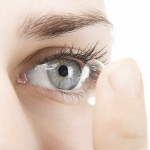 Advanced multifocal contact lens designs continue to reach the market. These designs are more likely than ever to minimize or eliminate reading glasses. “Most contact lens wearers do not like glasses of any kind, so being able to reduce their dependence on reading glasses greatly increases the patients satisfaction with wearing contact lenses”, reports Dr. Henahan. “It can take some time, but I am able to successfully fit multifocal contact lenses about 85% of the time.”
With the increasing incidence of diabetes, glaucoma and dry eye, it is more important than ever to get routine eye exams. Generally, once per year if you are over age 50, diabetic or have a family history of eye disease. Younger people without health problems and perfect vision can have an exam once every two to three years. [Read more…] about Contact lens wearers more likely than ever to avoid reading glasses