Blade-Free LASIK Eye Surgery in Bloomfield Hills, Michigan
Wake up and see the clock without reaching for your glasses. Our refractive surgeons perform all-laser LASIK with the WaveLight® Refractive Suite, and most patients are back to their routine the next day.
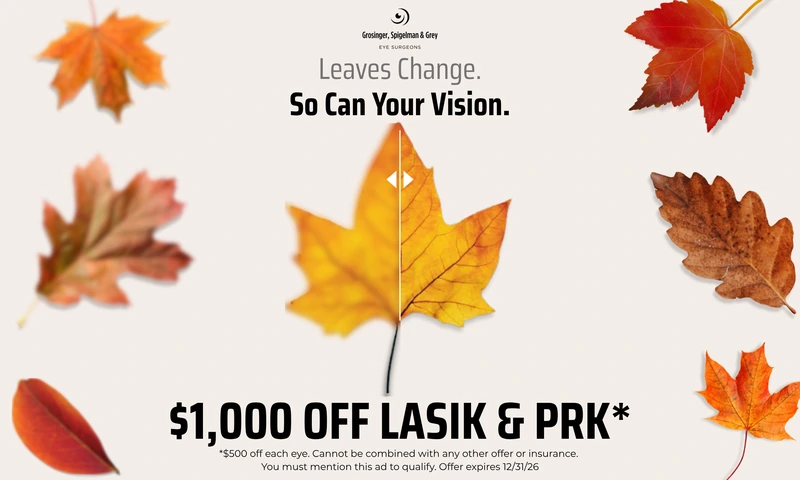
$500 off each eye. Cannot be combined with any other offer or insurance. You must mention this ad to qualify. Offer expires 12/31/26.
Most patients drive and work after their day-one check
No blades
Flap created by femtosecond laser, not a microkeratome
Free consult
Full eye mapping and a written quote, no obligation
Understanding LASIK
What Is LASIK?
LASIK (laser-assisted in situ keratomileusis) is the most widely performed laser vision correction procedure in the world. It works by gently reshaping the cornea, the clear front window of your eye, so that light focuses precisely on the retina instead of in front of or behind it.
Your surgeon first creates a thin, hinged flap in the cornea, reshapes the tissue underneath with an excimer laser, then lays the flap back in place. The flap acts as a natural bandage and bonds on its own without stitches. That is why LASIK recovery is typically faster and more comfortable than surface procedures like PRK.
What LASIK can correct
Nearsightedness
Myopia
Light focuses in front of the retina, so distant signs, screens and faces look blurry.
Farsightedness
Hyperopia
Light focuses behind the retina, making close-up tasks like reading tiring or blurry.
Irregular cornea
Astigmatism
A cornea shaped more like a football than a basketball scatters light and blurs vision at every distance.
Over 45 and starting to need readers?
LASIK does not reverse presbyopia, the natural age-related loss of near focus. Ask about monovision LASIK, or see whether Refractive Lens Exchange (RLE) is a better long-term fit.
Is LASIK right for you?
Who Is a Good Candidate for LASIK?
Your free consultation includes detailed corneal mapping and thickness measurements, so your surgeon can confirm candidacy with real data. In general, good LASIK candidates:
Are 18 or older
Most of our LASIK patients are in their 20s to 40s, after vision has had time to settle.
Have a stable prescription
No significant change in glasses or contacts for at least the past 12 months.
Have healthy, thick-enough corneas
LASIK needs enough corneal tissue to create a flap safely. Thinner corneas often do better with PRK.
Fall within the treatable range
Most common levels of nearsightedness, farsightedness and astigmatism can be treated.
Have good overall eye health
No active infection, keratoconus, uncontrolled glaucoma or significant untreated dry eye.
Are not pregnant or nursing
Hormone changes can shift your prescription for a while, so we wait until vision is stable.
Told you’re not a LASIK candidate?
You may still have great options. PRK & Advanced Surface Ablation is flapless and ideal for thin corneas, and RLE can help patients over 45.
LASIK at Grosinger, Spigelman & Grey is completely blade-free. You are awake the whole time, the laser portion takes only minutes, and you go home the same day.
1
Comfort & Numbing
Anesthetic eye drops numb the eye completely. No needles, no general anesthesia.
2
Blade-Free Flap
The WaveLight® FS200 femtosecond laser creates a thin, precise corneal flap in about six seconds.
3
Precision Reshaping
The Allegretto Wave® EX500 excimer laser reshapes the cornea to your exact measurements, usually in seconds per eye.
4
Flap Repositioned
The flap is smoothed back into place and seals naturally. You rest briefly, then a driver takes you home.
Our technology
All-Laser LASIK with the WaveLight® Refractive Suite
Our surgeons pair two lasers designed to work together: the WaveLight® FS200 femtosecond laser for flap creation and the Allegretto Wave® EX500 excimer laser for corneal reshaping.
Blade-free flap creationA laser, not a metal blade, forms the flap, giving consistent thickness and a smooth, predictable edge.
Wavefront-optimized treatmentDesigned to preserve the cornea’s natural curvature, which helps reduce night glare and halos.
High-speed eye trackingThe laser follows tiny, natural eye movements during treatment so every pulse lands where it should.
Fast treatment timesShorter laser time means more comfort and less time with your eye held open.
Your treatment day
What to Expect: Before, During & After LASIK
Pre-op
Preparing for LASIK
It starts with a comprehensive consultation: corneal mapping, thickness and pupil measurements, and a dry eye check. If you’re a good candidate, you’ll receive these instructions:
Take a contact lens breakContacts temporarily change the shape of your cornea. Switch to glasses for the period your surgeon recommends before your measurements and surgery.
Keep it cleanSkip eye makeup, lotions and perfume the day before and the day of surgery.
Line up a driverYou’ll need a ride home after surgery and to your day-one follow-up.
In office
On Surgery Day
Plan on being with us for about 1.5–2 hours. The laser treatment itself takes only minutes for both eyes.
Numbing and comfortDrops numb your eyes, and a mild oral relaxant is offered.
Focus on a lightYou’ll look at a small target light while the lasers work. Many patients feel brief pressure, but not pain.
Quick post-op checkYour surgeon checks the flaps, places protective shields, and sends you home to rest.
Recovery
After LASIK
Most patients notice a dramatic improvement within hours. A few simple steps protect your results while the flap heals:
Rest your eyesNap or keep your eyes closed for the first few hours. Mild scratchiness and watering are normal.
Use your drops and shieldsFollow your eye drop schedule and wear the shields while sleeping for the first week.
Hands offNo eye rubbing, eye makeup, swimming or hot tubs until your surgeon gives the okay.
Healing
Your LASIK Recovery Timeline
Everyone heals a little differently, but here is what a typical recovery looks like.
First 4–6 hoursRest at homeEyes may feel gritty or watery. Sleep is the best medicine.
Next morningDay-one check-upMost patients see well enough to drive and return to work after this visit.
First weekProtect the flapKeep using drops, wear shields at night, and skip rubbing, makeup and swimming.
1 to 3 monthsVision keeps sharpeningMild dryness or night halos are common early on and usually fade as your eyes heal.
3 to 6 monthsFully stable resultsYour final follow-up confirms your new, stable vision.
Compare your options
LASIK vs. PRK: Which Is Right for You?
Both procedures use the same excimer laser and deliver comparable long-term vision. The difference is how the surgeon reaches the corneal tissue, which changes recovery.
LASIK
Flap-Based
Corneal flapYes, laser-created
Functional visionUsually within 24 hours
ComfortMild irritation for a few hours
Best forAverage to thick corneas, fast return to work
Long-term outcomeExcellent
PRK / ASA
Flapless
Corneal flapNo, flapless
Functional visionAbout 5 to 7 days
ComfortModerate soreness for the first few days
Best forThin corneas, contact sports, some dry eye
LASIK pricing depends on your prescription and treatment plan, so we don’t quote a one-size-fits-all number. At your free consultation you’ll get a clear, written quote. Over time, many patients find LASIK costs less than years of contacts, solutions and new glasses.
Limited-time offer
$1,000 Off LASIK
$500 off each eye. Mention this offer. Expires 12/31/26.
Pre-tax dollars
Use Your FSA or HSA
LASIK is an eligible expense. Use your remaining balance before the year-end deadline.
No. Numbing drops keep you comfortable during the procedure, though you may feel brief pressure. Afterward, most patients describe mild scratchiness or watering for a few hours that eases with rest.
How long does LASIK take?
The laser treatment takes under 15 minutes for both eyes. Including prep and a short rest afterward, plan on spending part of a morning or afternoon with us.
When can I drive and go back to work?
Most patients drive and return to work the day after surgery, once your surgeon confirms your vision meets the legal driving standard at your day-one visit.
Are LASIK results permanent?
The correction to your cornea is permanent. Your eyes still age naturally, so most people eventually need readers in their mid-40s or later. A small number of patients benefit from a touch-up enhancement.
What are the risks and side effects?
The most common side effects are temporary dry eye and glare or halos at night, which typically improve over the first few months. Serious complications are rare. Your surgeon will review your individual risks at your consultation.
Can I get LASIK if I have astigmatism or dry eyes?
Astigmatism is commonly treated with LASIK. Mild dry eye can often be managed before surgery so you can proceed. If dry eye is more significant, PRK may be the better choice.
Does insurance cover LASIK?
LASIK is considered elective, so most medical insurance plans don’t cover it. Some vision plans offer discounts, and you can use FSA or HSA funds. Our team can walk you through your options.
What if I’m not a good candidate?
You may still be a great fit for PRK/ASA or Refractive Lens Exchange. Your surgeon will recommend the procedure that best matches your eyes and lifestyle.