

To our friends, family and patients who celebrate, we wish you a healthy and happy 5781.
To our friends, family and patients who celebrate, we wish you a healthy and happy 5781.

If you’re thinking about having LASIK to improve your vision, you’ll first need to undergo a consultation to ensure you are a good candidate for the surgery. We first will conduct a thorough, dilated eye exam. During this exam, the overall health of your eyes will be assessed to ensure you do not have any problems that would preclude you from having LASIK.
While your eyes are dilated, we will measure your prescription in order to understand your visual potential. We will also assess the relationship between your two eyes in a binocular vision test. For optimal results after LASIK, both eyes need to be properly aligned and working together. Another screening test will be performed to gauge the quality and quantity of your tears; for patients with dry eyes, we may recommend treatment to improve your tear production before proceeding with surgery.
You will also undergo a variety of corneal measurements to ensure your cornea is a shape and thickness suitable for LASIK. If you wear contact lenses, you will need to leave them out for several weeks before corneal measurements are taken in order to ensure accurate results.
If you are considering LASIK eye surgery to improve your vision, contact the eye care specialists at Grosinger, Spigelman, and Grey in Bloomfield Hills, Michigan to set up your consultation visit. You may also visit our website and take a self-evaluation vision correction test.
LASIK surgery for vision correction is a wonderful option for most people. However, not everyone is a good candidate. Below are some of the requirements to determine if LASIK may be the right choice for you.
If you are interested in LASIK or another vision correction surgery, please contact Grosinger, Spigelman & Grey’s Bloomfield Hills office for an appointment. Our experienced ophthalmologists will examine your eyes to see what is best for you.
If you’re like most people, you may need corrective lenses – either glasses or contacts – in order to achieve your best vision. Approximately 75% of adults in the United States use vision correction of some kind. Glasses and contact lenses are used to correct what’s known as refractive error. When light enters the eye, it should ideally be focused on a very specific point on the retina in order to create a clear image. If light is focused at a point in front of or behind the retina, the result is refractive error. There are several different types of refractive error including myopia (near-sightedness), hyperopia (far-sightedness), astigmatism and presbyopia. Near-sightedness is the most common type of refractive error in which objects in the distance are blurry, but objects up close are clear.
LASIK is a laser procedure that reshapes the cornea in order to correct refractive error. In individuals with no other eye problems, LASIK can mean freedom from glasses and contacts. By reshaping the cornea, our ophthalmologists can ensure that light focuses on the correct area of your retina to give you clear central vision. This procedure is particularly successful in adults who have a mild degree of myopia. Children under 18 may still experience changes in their degree of refractive error and are therefore encouraged to wait until their vision stabilizes before considering refractive surgeries such as LASIK.
If you’re tired of wearing glasses or contacts, contact Grosinger, Spigelman & Grey in Bloomfield Hills, Michigan for an appointment, our ophthalmologists will examine your eyes to see if LASIK is the right choice for you.
Grosinger, Spigelman & Grey offers the latest generation of laser vision correction. Our experience, expertise, combined with the technology available allows our ophthalmologists to offer customization to provide you the very best results possible. LASIK surgery procedures are more affordable than ever, schedule an appointment for a comprehensive eye examination to see if you are a candidate for 20/20 in 2020 and to learn more about the procedure and benefits.
Help us bring awareness to the importance of regular eye exams. Together, we can eliminate avoidable blindness. Schedule your appointment today.
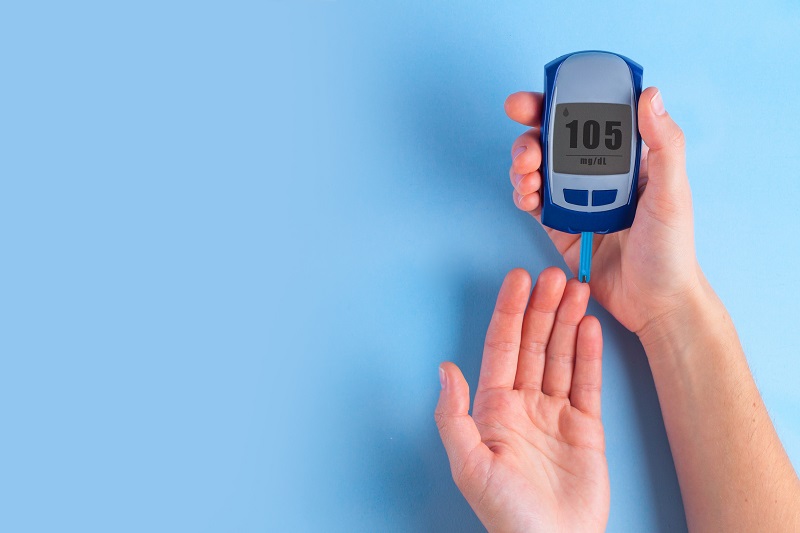
According to the Centers for Disease Control and Prevention, there are over 100 million adults living in the United States that have diabetes or prediabetes. Make sure you understand the signs so you can protect your vision.
Patients who have diabetes are susceptible to a group of eye problems. These include glaucoma, cataracts, and diabetic retinopathy. The last one is the leading cause of blindness in adults between the ages of 20 and 74.
Experiencing no symptoms doesn’t necessarily mean you are okay. The early stages of diabetic retinopathy show no signs of the disease. You may not notice any problems until the condition has advanced. That’s why it’s vital to take a proactive approach to your eye health.
Everyone should get regular eye exams, but it is especially crucial for people with diabetes. Your eye disease risk is increased. The longer you have diabetes, the more likely you are to develop a problem. Between 40% and 45% of diabetes patients have some diabetic retinopathy.
Always take your medication as prescribed by your doctor. This will help keep symptoms under control. It can also slow or prevent problems that could affect your vision.
Along with sticking to your medication regimen, you should also take steps to live as healthy a lifestyle as possible. Keep your weight where it should be and eat a nutritious diet. These changes can help lower your risk of diabetic eye disease.
If you have diabetes or prediabetes, let us know. Schedule an appointment with Grosinger, Spigelman and Grey, Bloomfield Hills ophthalmologists, and take the first step in protecting your vision.

Screens have become a normal part of life in modern society. We use them to work, watch television, play video games, look at the weather, etc. The average adult consumes five times more information daily than they did over 50 years ago. Much of this is due to the increased use of computers, mobile phones, and the internet. It’s not uncommon for the average person to spend seven hours or more a day looking at a screen.
Blue Light and Your Eyes
The issue isn’t so much the screen itself but the blue light being emitted by the screen. You can look at a screen and generally experience no long-term side effects. However long exposure to blue light can cause damage to your eyes.
A recent study funded by the National Eye Institute (NEI) found that children’s eyes absorb more blue light from screens than adults do. Which can be seen today when we give our child a screen to keep them busy while we carry on with our day to day responsibilities. Other studies suggest that continued exposure can lead to retinal cell damage.
You may also notice the symptoms of eye strain. If you experience dry eyes, fatigue, or headaches, it may be time to cut down your screen usage.
Protecting Your Eyes from Digital Screens
Changing your habits can help protect your eyes from the side effects of lengthy screen time. You can:
During your appointment, ask us how to protect your vision from digital screens. Our ophthalmologists have studied these topics and can answer your questions and help you develop habits that keep your eyes healthy.

To our family, friends and patients who celebrate, Grosinger, Spigelman & Grey wishes you much health and happiness this Rosh Hashanah.
Most adults need some vision support by the time they reach age 40. Some go to an eye doctor to get a pair of prescription glasses. Others head to the local pharmacy or retailer to pick up a pair of over-the-counter (OTC) reading glasses. Which option is the best choice for your eyes?
Pros of Over the Counter Glasses
Cons of Over the Counter Glasses
Pros of Prescription Glasses
Cons of Prescription Glasses
While OTC glasses may be cheaper and easier to buy, they are not the best option in the long run. Everyone should have regular eye exams to check for conditions like glaucoma and cataracts. Prescription glasses will perform better and are tailored to your vision needs.
It may not hurt to have a pair of OTC readers available to put on as a backup, but in the end, it’s best to get prescription. Contact Grosinger, Spiegelman & Grey to schedule a comprehensive eye exam.