LASIK or Laser Assisted In-Situ Keratomileusis is one of the most popular forms of laser corrective eye surgeries available on the market today. This procedure began being used in the 1990s and has grown in popularity and reliability since its inception and approval by the FDA. The base procedure with LASIK is that a laser is used to permanently change the shape of the cornea in the eye in order to correct near-sighted or far-sighted vision.
Understanding LASIK surgery
The basic LASIK surgery involves cutting back the cornea of the eye to expose the stoma and the a laser removes portions of the stoma to modify how light travels through the eye to correct any vision problem the patient may be having. The flap is then placed back over the stoma and the eye is allowed to heal. Patients report have considerably better vision immediately after the procedure and the procedure is performed in one visit with no overnight hospitalization. There are multiple types of procedures that fall under the LASIK category including radial keratotomy (RK) which uses a sharp knife to access the cornea and change its form or photorefractive keratectomy (PRK) where the stoma is accessed after the top layer is scraped away. There is one surgery that uses heat to modify the cornea called thermokeratoplasty.
LASIK risks
Any surgery has risks and LASIK is no different. Some patients have reported that their night vision is no longer clear or that they see blurred stars around objects. Others do not get the vision improvement that they hope for or they only get a slight improvement. Complications can happen so make sure when you shop for LASIK in Detroit that you find a quality surgeon.
LASIK Detroit technology has grown tremendously and it’s important to shop and find the best option for you and your vision.

Are you fit for LASIK eye surgery?
Although LASIK surgery can help correct vision and eliminate the need for glasses or contacts, it is not a procedure fit for everyone. Considering it has a great track record and an increasing amount of people go through it, LASIK, or laser assisted in situ keratomileusis surgery, can have more cons than pros depending on the patient.
LASIK surgery is a refractive eye surgery that involves creating a hinge like flap in the outermost layer or the cornea, and then using a laser to reshape the inner cornea to help correct vision. LASIK can be the right procedure for those suffering from myopia, hyperopia, or astigmatisms. Myopia is when your vision is generally fine, but there is an issue with the focus things far away, causing blurriness. Hyperopia is just the opposite; when patients can see everything fine through long distances, but something nearby can appear blurry. Astigmatism is a more severe condition, where everything is blurry regardless of whether one is looking at something up close or from far away. These can all be discovered through a series of test and a pre operation evaluation, which happens to be free at Eye Michigan.
A visual condition that is debatable when it comes to determining you a valid patient for the LASIK surgery is presbyopia, where one has difficult reading things in small print and doing other close up activities. People with this defect can be fit for the surgery, but there is a risk because the procedure can help clear up long distance vision, but can make your nearsightedness even worse. With this lies the option of monovision, where the surgery is only performed on one of the eyes, giving you double perspective with one eye being good with long distance and the other good for nearsighted vision. Monovision, like the procedure itself, is not for everyone and can be difficult to adjust to.
If any questions remain, they can be further discussed with our ophthalmological experts at Eye Michigan.
Side Effects of LASIK Eye Surgery
LASIK surgery has a substantially high success rate, but like with every surgery there could be side effects. In the case of LASIK surgery, these side effects are not long term and are mostly minor. They are also dependent on the type of LASIK one has performed on them: Custom, Bladeless, or traditional. Traditional LASIK can have more side effects than Custom, for instance, because the technology allows for better precise cuts and it is generally a more refined. All in all, side effects can include dry eyes, sensitivity to light, issues with night vision, or short period of loss of clarity.
Dry eyes, above all other effects, have the highest probability of occurring. It can easily be resolved with moisture eye drops than be purchased at a pharmacy or prescribed by our doctors. With repetition of the use of these drops, your eyes should be back to normal within a few weeks at most.
Light sensitivity can be quite irritating for those who just had the surgery performed. This is due to the urge most would have to rub their eyes to help adjust to the light, but especially right after the surgery, one shouldn’t rub their eyes because it could interrupt the healing process of the corneal flap reattachment. The flap is repositioned after the surgery and rubbing of the eyes could move it. In that case a patient would have to visit their surgeon again to have it repositioned and the healing process would be extended. Over all, sensitivity to light goes away within a few days post-surgery.
There is a chance of the corneal flap not being able to heal correctly due to positioning, and this could lead to night vision problems. It could easily be fixed by making a visit to your surgeon to have it repositioned again. The night vision problems are caused by your eye having trouble with contrast in low lighting. However, one may also experience glare or halos from light, or star bursts, which are spiky shapes seen around light sources. With the repositioning of the flap, this could go away over a span of a few months.
Grosinger, Spigelman & Grey feel it’s important to provide their clients with all information available regarding the surgery they are about to have. If you have any other question please give our offices a call today at (248) 333-2900.
The History of Eye Michigan
Eye Michigan is one of the finest laser eye correction centers in Southeast Michigan. The gist of what makes this institution so great is its experienced and well educated staff.
Our laser eye center’s doctors include Dr. Les Grosinger, Dr. Alan Spigelman, and Dr. David Grey.
Dr. Grosinger was a part of the Inteflex medical program at the University of Michigan for six years, where he received his Bachelor of Science and M.D. degrees. He became certified in Internal Medicine and Ophthalmology after a residency at William Beaumont Hospital and then in 1990 at Sinai Hospital, where he earned the resident of the year award. Dr. Grosinger is now engaged in working Eye Michigan, he is also the director of the Eye Surgery Center of Michigan. Being involved in multiple laser eye centers, Dr. Grosinger also is a staff physician at many hospitals and is active in the discovery of new methods and research for cataract surgery.
Dr. Spigelman started out as a student at the University of Illinois in 1977, where he earned a Bachelor of Science in Honors Biology, and then got into the medical program to work for his doctorate. His studies in ophthalmology began at the University of Illinois Ear and Eye Infirmary, and then were continued at an internship at the University of Minnesota Medical School in 1986 and 1987. This internship involved schooling in refractive, cataract, corneal, and anterior segment surgery. Dr. Spigelman has been declared one of Michigan’s best physicians by his peers and in 1997, he received the American Academy of Ophthalmology’s Honor Award.
Dr. Grey has been active in the field of ophthalmology for twenty years, and as part of this laser eye center, he is a highly respected ophthalmologist in Southeastern Michigan. Dr. Grey first studied biology at the Magna Cum Laude at Rensselaer Polytechnic Institute, and after graduating went into working for his medical degree from Wayne State University School of Medicine in 1985. He became certified in by the American Board of Ophthalmology in 1991, two years after acquiring the H. Sol Sugar Award for Resident of the Year.
The doctors at this laser eye center are highly respected and with their experience are considered true professionals. Eye Michigan is a laser eye center where you can trust these doctors, and expect promising results.
Laser Eye Surgery and It’s Costs PART 2
At Eye Michigan we have the most up to date technology at our disposal, which calls for smaller margin for error and problems. Depending on the eye condition, the older technology and older remedies can be more applicable, but one should do research on how effective each procedure can be in correcting one’s flawed sight. For any remaining questions, our surgeons could be contacted directly.
Eye Michigan offers a great deal and our customers can be assured great results thanks to our modern technology and experienced professionals.
With an average cost of about $2000 per eye, patients are paying for the surgery itself, our surgeons, the office, and aftermath procedures that may be required to help get your vision completely corrected. The variation in price is mostly dependent on the procedure performed. For example:
- Custom procedure – on average cost $2000 per eye, and uses the ALGERETTO WAVE laser that allows for very precise cornea restructuring
- Traditional procedure – on averages costs $1700 per eye, and uses the Amadeus microkeratome to create incisions in eye flaps, and then uses an excimer laser to reshape the cornea
- Bladeless – has produced the best results for our customers, and uses only lasers to conduct the surgery procedure, the cost could be up to $2100 per eye or slightly more
Seeing the Olympics: One Athlete’s Story of Overcoming Vision Loss and Going for Gold
Bobsled racer Steven Holcomb has had many visual problems in the past six years. It brought danger to himself and his teammates with his continuation of racing. Even with this obstacle, he raced based more on feel than vision. A procedure was performed to give him his 20/20 vision back, and he became increasingly successful in his races.
Holcomb was victorious with winning nine out of sixteen two man World Cup competitions. These successes would determine his starting position in the Olympics. However, his vision began to worsen once again, and he was diagnosed with an eye disease called Keratoconus. This basically meant his cornea was thinning, and he was forced to retire. He had another procedure performed on him in 2008, where vitamin drops and ultraviolet rays strengthened his cornea. Then, his contacts were inserted and his vision was corrected back to 20/20.
This allowed for him to return to the Sochi Olympics and although he had a struggle adjusting to racing based on vision and not the actual feel of the track, he got back in his groove, and is now driving the Night Train 2 and a new BMW sled in these Olympics. This just goes to approve how many vision problems could be corrected, especially with the professionals we have here at Eye Michigan. If you are experiencing any visual issues, call (248) 333-2900 or visit www.eyemichigan.com for further information and references.
Happy Valentine’s Day from everynoe at G, S & G Eye Michigan!
https://youtu.be/LCzKT7DETQU
What Not to Do Following Cataract Surgery
Once the surgeon is finished with your cataract surgery, you will spend time in your hospital room until the doctor has come by to make sure everything is ok. He will then schedule a number of follow up visits to check on the health of your eyes and the success of his work. During this post-operative period you will be required to administer anti-microbial eye drops intended to help speed the healing process. You must also apply corticosteroid drops to keep inflammation down, and cycloplergic drops which will help reduce your sensitivity to bright lights.
Problems to Look For
During the post cataract surgery recovery period you should look out for a number of symptoms that could indicate a problem. Among these are your eye becoming painful and red, pain that becomes steadily worse over time, and any sudden loss of vision. If you experience these symptoms or flashes of light or a severe headache, you need to contact your doctor immediately.
Things You Should Not Do After Your Cataract Surgery
There are several things you should not do following your surgery as they can cause permanent and irreversible damage to your eye. These include:
- Not rubbing or squeezing your eye
- Not allowing water to get into your eye while bathing
- Allow anything other than your eye drops to get into your eye
- Allow anyone or anything to hit you in the face
- Perform any type of vigorous exercise until approved by your doctor
- Drive until your doctor tells you that it is safe to do so
As long as you follow this advice as well as your doctor’s orders to the letter your eye should recovery completely. If your doctor performed the surgery using the phacoemulsification method the recovery period should be between 3 and 4 weeks. If he used a larger incision and closed it using stitches, the recovery period may be as long as 2 to 3 months. But no matter which method he uses the recovery should be full and your eyesight fully restored.
Eye Michigan (Doctors Grosinger, Spigelman & Grey) have been performing corrective optical surgeries for over 30 years, and have extensive experience in the field of eye medicine. Call them today for a free consultation or screening.
Laser Eye Surgery and It’s Costs PART 1
A lot of factors play a role in the cost of LASIK Eye Surgery, which causes variation from clinic to clinic across the nation. These include the experience of the surgeon, your location, whether insurance covers partial costs, and the technology used in the procedure. Eye Michigan has very experienced surgeons and the most modern technology for LASIK surgery. How each of these conditions turn out for you as a customer can project you a bill ranging anywhere from $1000 to $3000 per eye in clinics across the nation. Currently, Eye Michigan offers 0% on the down payment and interest for 12 months. It is a great opportunity for potential customers.
For instance, most insurance companies don’t cover costs for LASIK Eye Surgery, but there are a few in particular that can bargain with our clinic to reduce costs. Without the help of insurance, the only way you can get a generous discount from us is if one needs the surgery to help continue or pursue one’s profession. This could include athletes, those who serve in the military, and more.
The surgery may be quite expensive even for those who live comfortably and make a steady salary. The high cost, however, shouldn’t create an incentive for people to find the cheapest center that provides LASIK Eye Surgery. The cheaper the surgery, the older the technology can be, and the less experienced or less professional the surgeon may be.
New Google Contact Lens to Give Health Updates Instantly
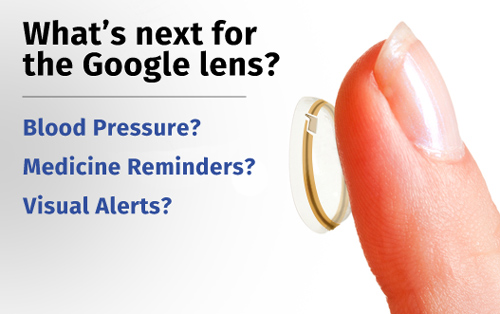
Google has recently made headlines in almost every sector in big business, and this is no exception. They are now developing a new way for people with Diabetes to read their glucose levels. It’ll be done with a smart contact lens, equipped with sensors and reading instruments. The sensors will take the reading from the tears the eyes constantly produce, which will relieve people that suffer from diabetes. The most common way to test now is by a blood sample, which is usually done by a device that pricks a part of the body, causing pain time and time again.
This is just one way companies like Google think outside of the norm and come up with new uses for existing technologies. Who knows what they’ll come up with next.